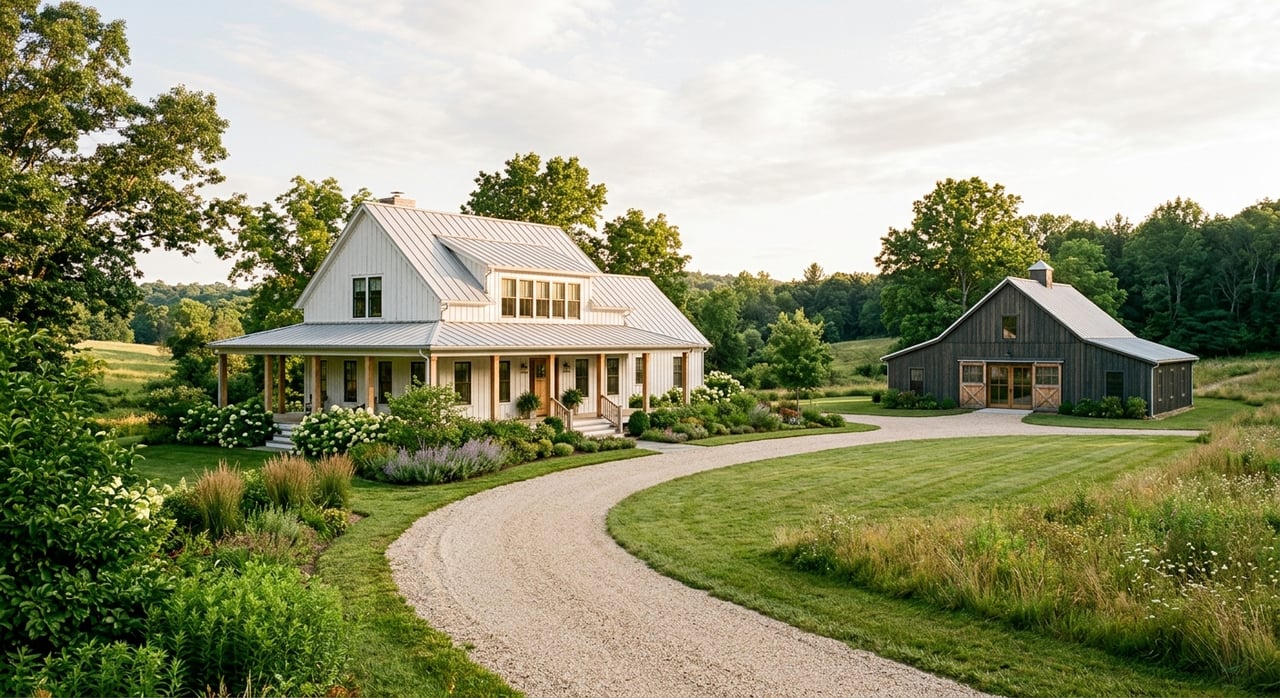
Thinking about buying a home with land in New Tripoli? A little extra acreage can open up a lot of possibilities, but it also adds a few layers you do not want to overlook. If you are hoping for more space, privacy, outbuildings, or room to grow, this guide will help you understand what to verify before you make an offer and how to move forward with more confidence. Let’s dive in.
Why land buying is different in New Tripoli
New Tripoli sits in a rural, acreage-focused part of Lynn Township, which describes itself as the largest township in Lehigh County with 41.3 square miles of mountains, rolling hills, and countryside. That setting is part of the appeal for buyers who want more breathing room than a typical in-town lot can offer.
It also means the land matters almost as much as the house. In this area, details like township rules, driveway access, private wells, septic systems, and agricultural programs can shape how you use the property now and in the future.
Another important point is that not every property with a New Tripoli mailing address is governed the same way. Northwestern Lehigh School District includes Heidelberg, Lowhill, Lynn, and Weisenberg townships, so you should verify the parcel’s exact municipality and school district instead of assuming all 18066 properties follow the same local requirements.
Start with the parcel details
Before you fall in love with the barn, the view, or the back field, confirm exactly what you are buying. For acreage purchases, your first step should be checking county parcel records and identifying the governing township.
Lehigh County’s Assessment Home provides both Assessment Records and a Parcel Viewer for parcel research. These tools can help you confirm parcel boundaries and basic property details before you move too far along.
That matters because township rules can vary. If a property is in Lynn Township, one set of forms and permit paths may apply. If it is in nearby Weisenberg Township, local zoning rules may be different.
Key parcel questions to ask
- Which township governs the property?
- What is the exact parcel size in county records?
- Is the parcel configuration what you expected from the listing?
- Are there any notes or factors that suggest extra review is needed?
Check zoning before planning changes
If you are buying a home with land, it is smart to think beyond the house itself. You may want to add a fence, build a shed, put up a barn, install a pool, or expand the home later on.
That is why zoning should be part of your early due diligence. Lynn Township’s building permit application requires a plot plan that shows lot dimensions, existing buildings, setbacks, and the location of the water well, sanitary system, and driveway. Its forms page also directs owners to zoning permits, subdivision and land-development applications, driveway permits, on-lot sewage permits, and an Agricultural Building Exemption form.
Nearby Weisenberg Township states that its zoning ordinance regulates the use, intensity, size, and location of buildings and structures, including fences, sheds, accessory structures, signs, and swimming pools. In practical terms, you should not assume that having land automatically means you can place improvements anywhere you want.
Ask these zoning questions early
- What permits are needed for additions or exterior changes?
- Are there setback requirements that limit where you can build?
- Are barns, sheds, pools, or fences regulated on this parcel?
- If you want future subdivision or land development, is that even possible?
Pay close attention to driveway access
On rural properties, the driveway can be a bigger issue than many buyers expect. If the driveway connects to a state highway, PennDOT says a Highway Occupancy Permit is required before constructing or altering that connection.
That means access is not just a convenience issue. It can affect your timeline, your plans for changes, and what approvals may be needed after closing.
If you are looking at a property with a long driveway, a shared access point, or a direct connection to a busier road, this is worth checking early. It is much easier to ask the question before you buy than to sort it out later.
Understand private well responsibilities
Many country properties in and around New Tripoli rely on private wells. Pennsylvania DEP says it does not regulate private wells, and the Pennsylvania Department of Health says residents who use private wells are responsible for maintenance and regular water-quality testing.
The state also notes that Pennsylvania has no statewide regulations for private well construction, maintenance, or water-quality testing. For buyers, that means the condition and testing history of a private well deserve careful attention during the purchase process.
The Pennsylvania Department of Health recommends annual testing for coliform bacteria, nitrates, total dissolved solids, pH, and other suspected contaminants. If a home has a private well, ask when it was last tested and whether any issues were found.
Well questions for buyers
- Is the property served by a private well?
- When was the well last tested?
- Were coliform bacteria, nitrates, or other contaminants reported?
- Who has maintained the system?
Review septic system condition and location
Acreage homes often come with private septic systems, and those systems need regular care. EPA says septic owners are responsible for operation, maintenance, upkeep, and repairs or replacement.
EPA recommends inspection every 1 to 3 years and pumping every 3 to 5 years. It also warns against building structures in the drainfield area without checking with the local permitting authority, and says trees, shrubs, and vegetable gardens are not recommended on the drainfield.
For a buyer, this is about both function and future planning. If you want to add a garage, patio, pool, or other improvement, you need to know where the septic components and drainfield are located.
Septic items to verify
- Is the home on private septic or public sewer?
- When was the last septic inspection?
- When was the system last pumped?
- Where are the tank and drainfield located?
- Could the septic layout affect future building plans?
Look into preserved farmland and agricultural status
Land in this area has a strong agricultural context. As of June 1, 2024, Lynn Township had 120 preserved farms totaling 9,085.50 acres, and Weisenberg Township had 59 preserved farms totaling 4,639.32 acres. Lehigh County also reports 28,028.26 preserved acres countywide.
That does not mean every acreage property is restricted, but it does mean you should ask questions before assuming the land can be used however you want. Lehigh County says agricultural security areas are intended to support long-term farming and the right to farm, and that land enrolled in an Agricultural Security Area does not restrict non-agricultural development.
Even so, buyers should still check for easements, preservation status, and other agricultural restrictions before making plans for future building or subdivision. If you are interested in barns or farm-related outbuildings, Lynn Township’s forms page lists an Agricultural Building Exemption, which is another reason to confirm the local approval path.
Build your due diligence team
Buying a home with land usually takes a little more coordination than buying a standard residential lot. The right local contacts can help you verify what matters before your decision becomes more expensive or more stressful.
Useful contacts for a New Tripoli acreage purchase include the township zoning office, the sewage enforcement officer, the county assessment office or parcel viewer, PennDOT for state-highway access questions, and a well or septic professional for testing and inspections. Pennsylvania’s private-well guidance also points homeowners to DEP, Penn State Extension, a certified well driller, or a state-certified lab for well maintenance and testing questions.
This is where having a practical, low-pressure real estate team can make a real difference. When you are comparing homes with land, you want clear answers, realistic next steps, and guidance that keeps the whole property in view, not just the square footage inside the house.
A smart checklist before making an offer
If you are serious about a home with land in New Tripoli, use this checklist to slow down and confirm the basics:
- Verify the parcel in Lehigh County records.
- Confirm the exact township governing the property.
- Check which permits may apply for your future plans.
- Ask whether the driveway connects to a state highway.
- Confirm whether the home uses a private well, private septic, or public utilities.
- Request recent well testing and septic service history if available.
- Identify the location of the drainfield and any setbacks.
- Ask whether the property is in an agricultural security area, preserved-farm program, or subject to easements.
- Clarify whether barns, sheds, fences, pools, or additions would need approvals.
Final thoughts on buying acreage in New Tripoli
A home with land can offer a lot of value in New Tripoli, from open space and privacy to flexibility for hobbies, storage, or future plans. But the best acreage purchase is not just about finding a pretty property. It is about understanding the parcel, the systems, the access, and the local rules that come with it.
When you take the time to verify those details upfront, you put yourself in a much stronger position to buy with confidence. If you are considering homes with land in Lehigh County and want grounded, practical guidance through the process, connect with Bear Rock Realty.
FAQs
What should you verify first when buying land in New Tripoli?
- Start by confirming the parcel in Lehigh County records and identifying the exact township that governs the property.
Why does the township matter for a New Tripoli home with land?
- Township rules can affect permits, setbacks, accessory structures, sewage approvals, and other property-use questions.
Do private wells in Pennsylvania require buyer attention?
- Yes. Pennsylvania says private well owners are responsible for maintenance and water-quality testing, so buyers should review testing history carefully.
What should you ask about a septic system on a New Tripoli acreage property?
- Ask when it was last inspected or pumped, where the drainfield is located, and whether the system layout could affect future improvements.
Can agricultural status affect future plans for land in Lehigh County?
- Yes. Buyers should check for agricultural security area enrollment, preservation status, easements, and other restrictions before assuming the land can be subdivided or built on freely.
Does a rural driveway in New Tripoli ever need special approval?
- Yes. If the driveway connects to a state highway, PennDOT says a Highway Occupancy Permit is required before constructing or altering that connection.